
Rose Soap
$12
Our story · قصتنا
First-press olive oil from family-owned orchards in the mountains around Tripoli. Slow-cooked, hand cut, stamped, and cured for six months in the workshop the Awaida family built in 1880.
Five generations later, the family is still making soap inside the building Haj Hussein Awaida spent ten years constructing for that single purpose.
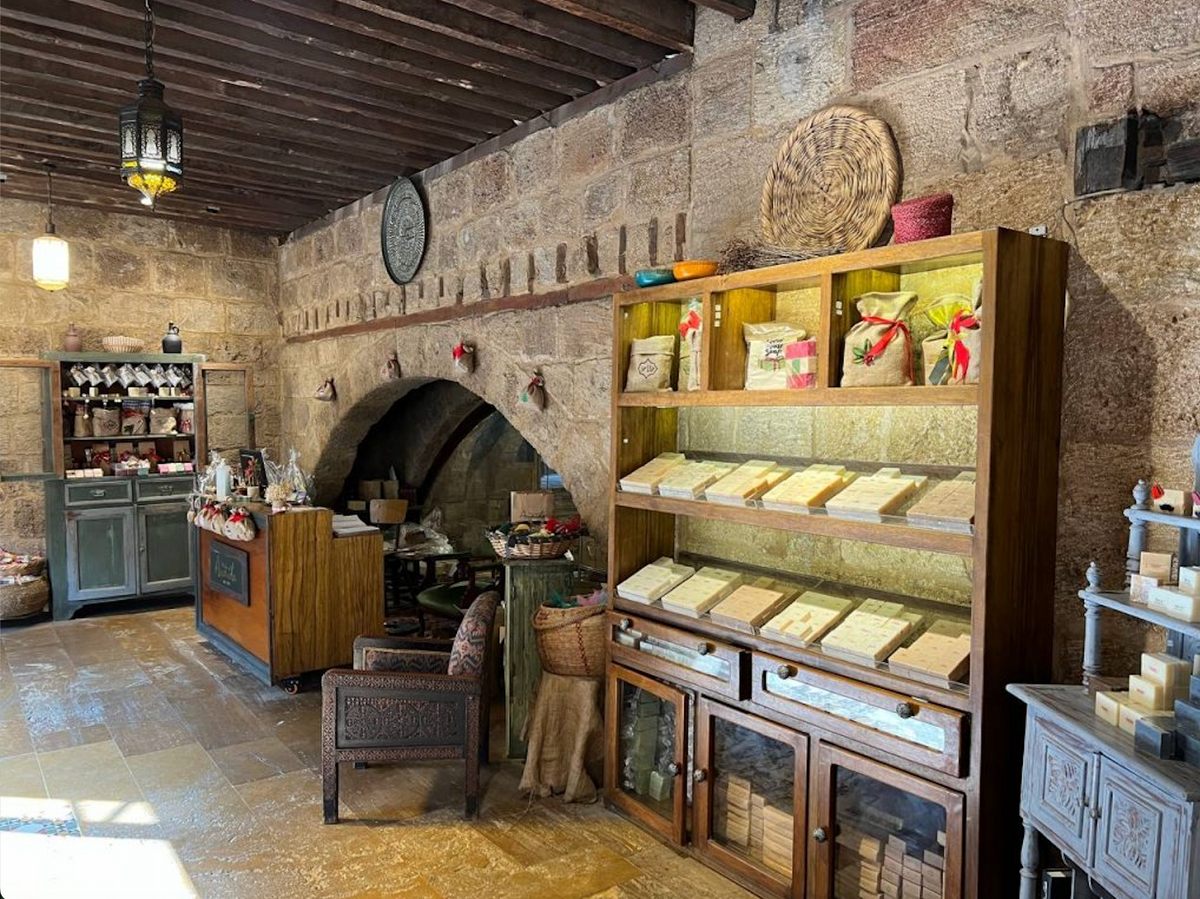
Tripoli, Lebanon · طرابلس
Alongside Aleppo and Nablus, Tripoli was one of the great soapmaking centers of the eastern Mediterranean. Olive oil from northern Lebanon supplied the material; the city’s port and markets connected its soapmakers to flowers, woods, herbs, resins, and the wider traditions of Mediterranean perfumery.
That exchange gave Tripoli two related traditions: the honest household olive-oil bar and soaps made expressive through fragrance, color, shape, and presentation. Purity and perfume were never opposites here. They were two ways of working with the same material.
In the first half of the twentieth century, dozens of workshops operated in the city. Then groves gave way to construction, the Civil War came, and liquid soaps and synthetic detergents changed what people expected from a bar. Most traditional workshops closed. By 2023, only two operations of this kind were reported to remain in Tripoli, and Masbanat Awaida was identified as Lebanon’s oldest.
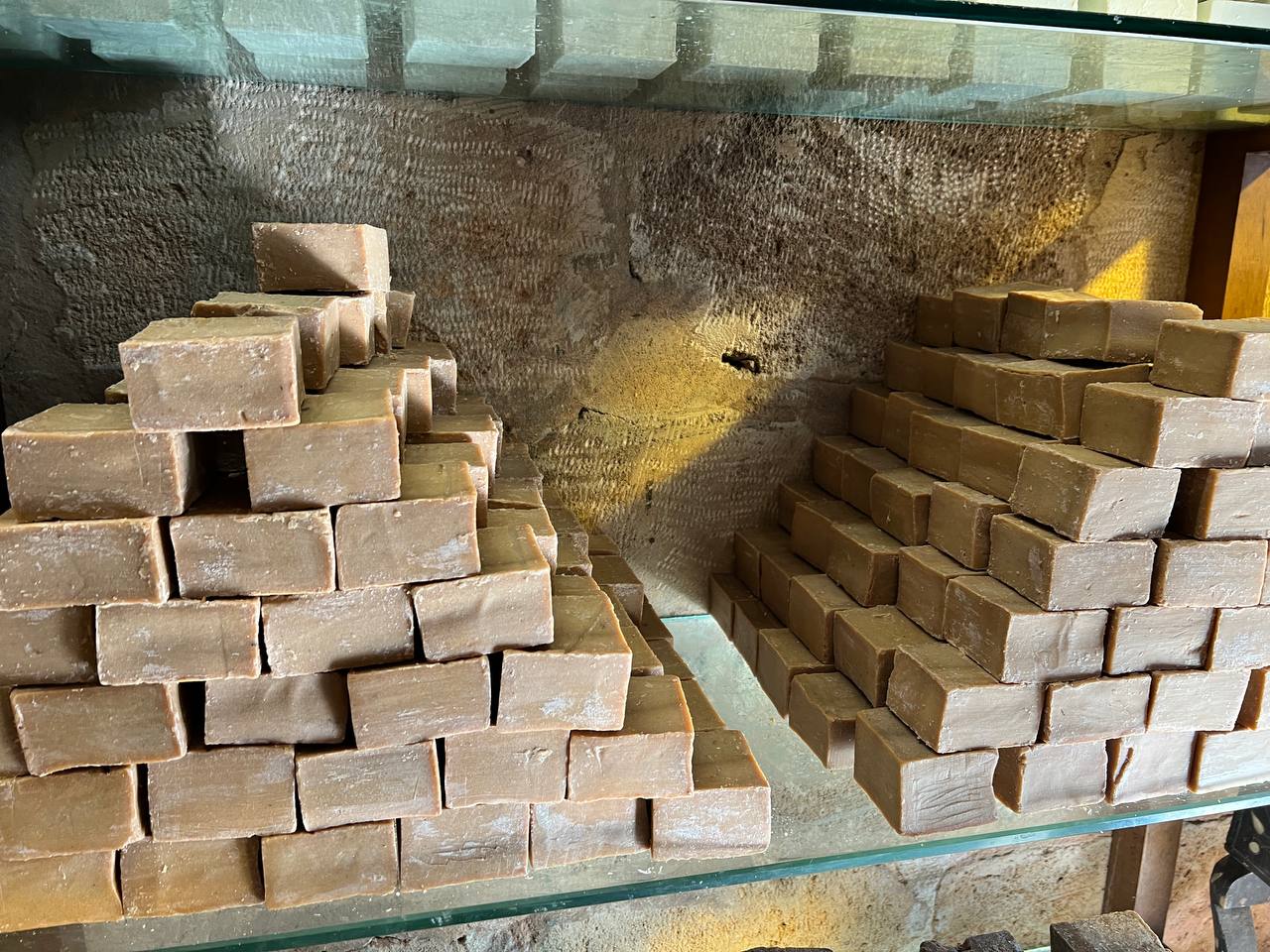
The beginning · 1880
Haj Hussein Awaida owned olive plantations in northern Lebanon and believed that industry—not agriculture alone—was what made an economy strong. So he built something: an Ottoman-style stone soapworks in Tripoli, ten years in the making, organized from the ground up around storing oil, cooking it, casting it, cutting it, and curing it.
The workshop opened in 1880. Five generations of Awaidas have inherited that building and the knowledge of how to use it. The current owner, Husni Awaida, is Haj Hussein’s great-great-grandson.
Continuity like this is never automatic. Through the hardest years, the family kept the workshop and its workers going, protected the traditional olive-oil bar, and built new products around it so the old method would always have something holding it up.
The workshop · المصبنة
The workshop is not a historic building that happens to make soap. It is a machine for making soap that happens to be a historic building. Its three levels were designed around the movement of one material from oil to finished bar.
Beneath the floor sits a network of roughly thirty-two stone oil wells, called biyara, built to keep the year’s olive oil cool, dark, and close to the cookers. On the ground floor, three enormous halla cook the soap; the largest is reported to hold seven tons of oil.
Above them, thick masonry and Ottoman-style arches help hold temperature and moisture steady while open-air rooms give thousands of bars the space to dry. The ingredient, the process, and the finished product all live inside one building.
The process · الطريقة
Olive oil, water, and alkali stay in the cooker for roughly three days, thickening and darkening as they turn into soap. When the batch is ready, workers form a human chain and carry it to the casting floor bucket by bucket while it is still hot.
The soap is raked into a slab about six centimeters deep and left to cool for forty-eight hours. A dye-coated string marks the first line; a right angle sets the rest. Every bar is stamped while the slab is still workable, then a five-person rake cutter divides it along the lines.
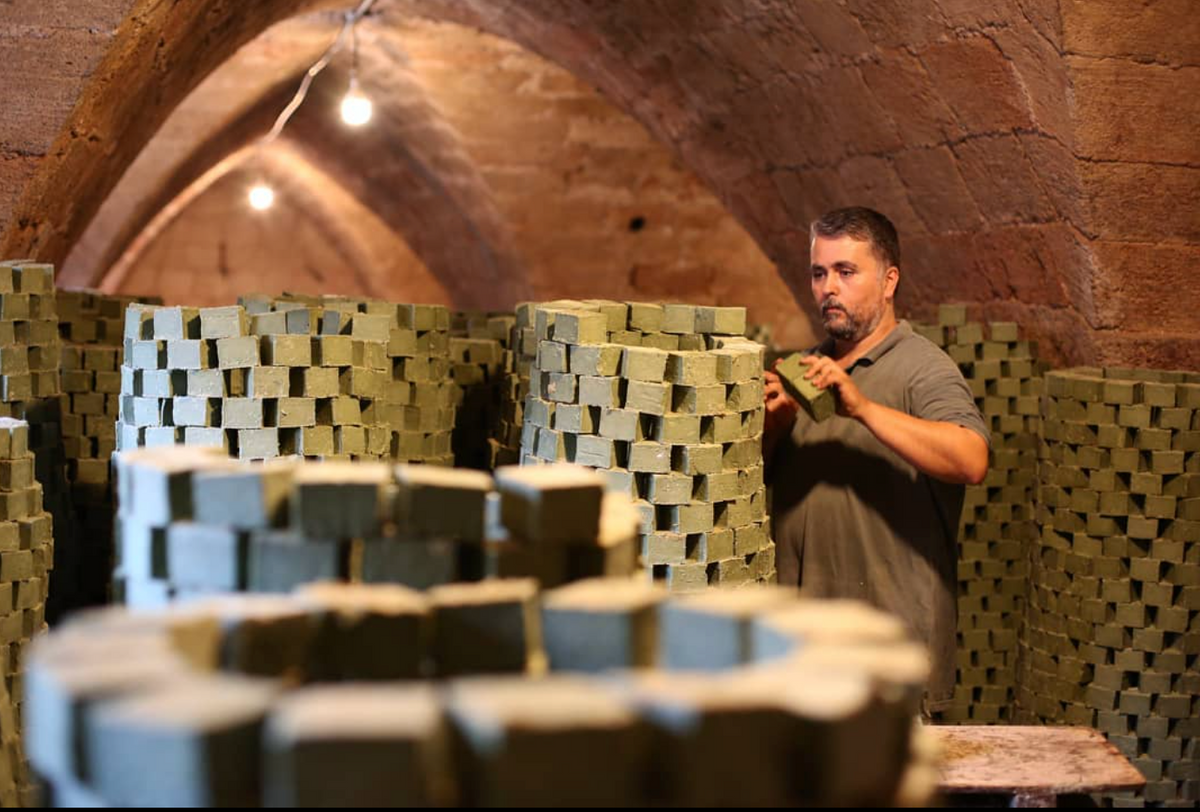
Finally, the bars are stacked with air moving between them and left alone for six months. Time removes the water and lets the soap harden without accelerants. That is why the bar becomes dense, why it lasts, and why something made from so little takes half a year to finish.
The people · الأيدي التي تصنع
The recipe passed down through the Awaida family. The judgment passed down through the workers. Some craftspeople have spent decades inside the workshop; in several cases, their fathers worked there before them.
The things that decide whether a batch is good are not fully written down: how the soap should look near the end of the cook, how firm the slab must be before cutting, how the rake should feel as it moves, how hard to strike a stamp, and how to stack thousands of bars without choking off the air.
You learn those things by standing next to someone who already knows. A formula can be copied. Continuity cannot.
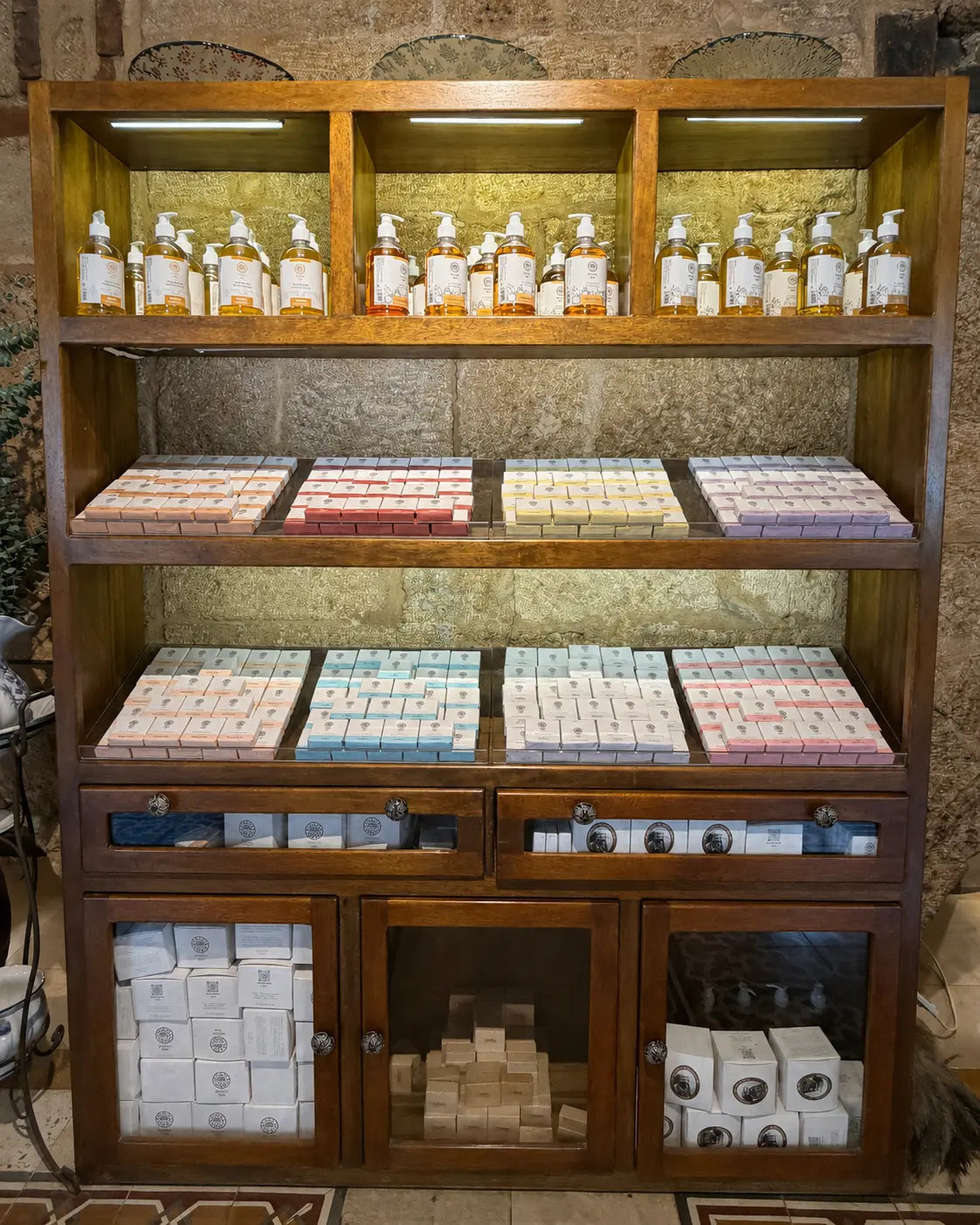
Begin with the 100% olive-oil original, or follow Tripoli’s other tradition through perfumed, herbal, and specialty soaps. Every expression begins with the same workshop, the same inherited knowledge, and the same insistence that good material deserves time.

